
Order Block: The Smart Money Footprint Every Forex Trader Must Master
Introduction
In the world of Smart Money Concepts (SMC), few concepts are as powerful and misunderstood as the Order Block. Many retail traders spend years chasing indicators, searching for the perfect strategy, or looking for secret get rich quick information, only to discover that the market is driven primarily by institutional order flow. Banks, hedge funds, and large financial institutions are the entities truly moving the market, and their footprints can often be identified through order blocks.
So, read this information to understand order block.
As a mentor in Smart Money Concepts, I often tell traders that understanding order blocks can completely transform how they view the market. Rather than buying and selling randomly or changing different strategy, traders learn to follow the footprints left behind by smart money.
This provides a structured and logical approach to trading, helping traders identify high-probability entry zones while maintaining proper risk management. so listen to me.
In this comprehensive guide, we will define an order block, explain bullish and bearish order blocks, discuss how to identify valid order blocks, and explore practical methods for trading them in the forex market.
What Is an Order Block?
An Order Block (OB) is the last opposite-colored candle before a strong impulsive move that breaks market structure.
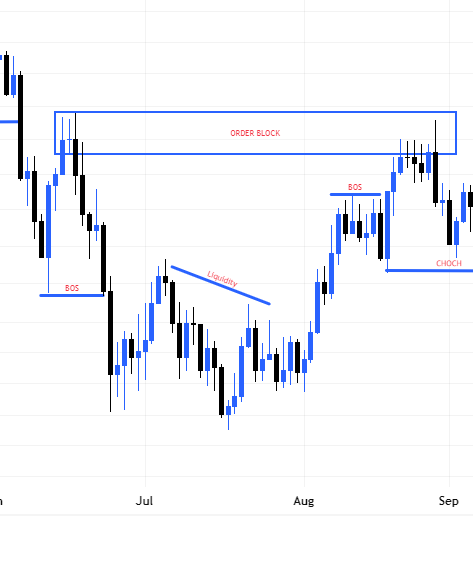
Simply say, it is a price area where large institutional participants accumulated or distributed significant positions before causing a substantial movement in the market.
The theory behind order blocks is simple:
- Institutions cannot place all their orders at a single price level.
- Their large orders require significant liquidity.
- Before a major directional move occurs, institutions often accumulate positions within a range.
- When enough orders are filled, price leaves the area aggressively.
- The origin of that move becomes an order block.
An order block acts as a potential supply or demand zone where institutions may return to add positions or defend existing ones.
Think of an order block as the “footprint” of smart money.
Why Order Blocks Matter
Order blocks matter because they reveal where major market participants have been active.
Retail traders typically buy when price is rising and sell when price is falling. Institutions often do the opposite. They seek liquidity from retail traders before moving the market in their intended direction.
Benefits of trading order blocks include:
- High-probability entries
- Better risk-to-reward ratios
- Clear stop-loss placement
- Greater insight into institutional behavior
- Improved market structure understanding
When combined with concepts such as liquidity grabs, fair value gaps, and market structure shifts, order blocks become even more powerful.
Bullish Order Block
A Bullish Order Block is the final bearish candle before a strong bullish move that breaks market structure to the upside.
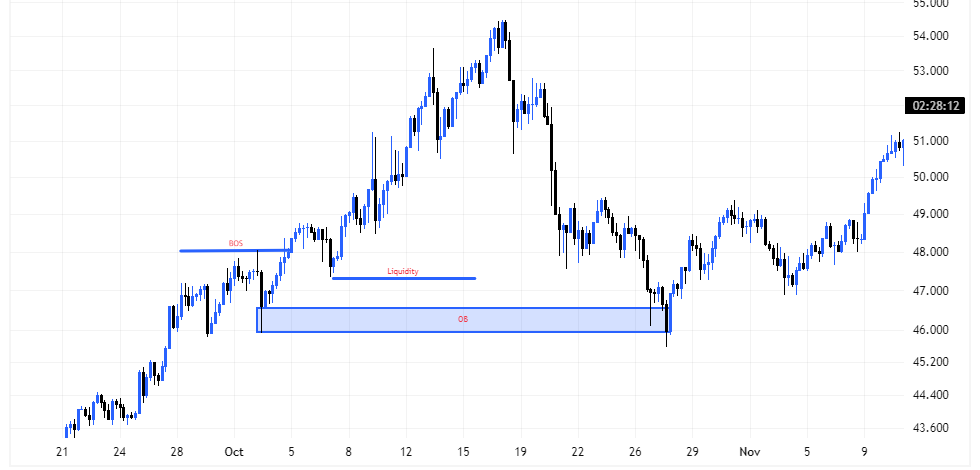
This bearish candle represents the area where institutions accumulated buy positions before driving price higher.
Characteristics of a Bullish Order Block
- The candle is bearish.
- It appears before a strong bullish impulse.
- The bullish move breaks market structure.
- Price often revisits the order block before continuing upward.
- The order block serves as a demand zone.
Example
Imagine EUR/USD is forming lower highs and lower lows.
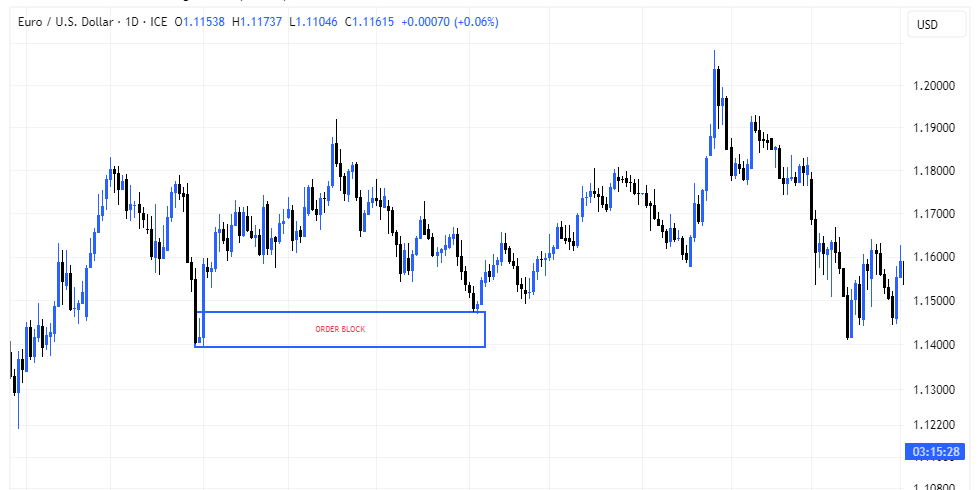
Suddenly:
- A bearish candle forms.
- Price explodes upward.
- Previous swing highs are broken.
- Market structure shifts bullish.
The last bearish candle before that explosive move becomes the bullish order block.
When price later retraces into this zone, smart money traders look for buying opportunities.
Bearish Order Block
A Bearish Order Block is the final bullish candle before a strong bearish move that breaks market structure downward.
This bullish candle represents the area where institutions distributed sell positions before pushing the market lower.
Characteristics of a Bearish Order Block
- The candle is bullish.
- It occurs before a strong bearish impulse.
- The impulse breaks structure downward.
- Price often retraces to the order block.
- The order block acts as a supply zone.
Example
Consider GBP/USD in an uptrend.
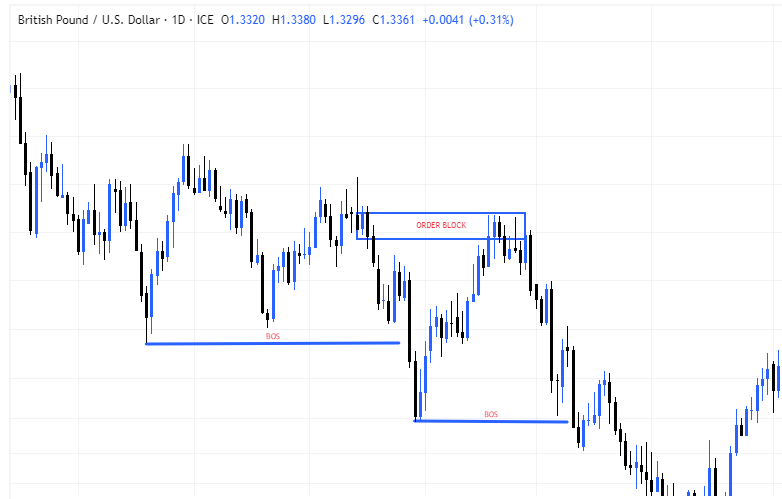
Suddenly:
- A bullish candle closes.
- Price collapses aggressively.
- Key swing lows are broken.
- Market structure becomes bearish.
The last bullish candle before that decline is classified as a bearish order block.
When price revisits this zone, traders monitor it for selling opportunities.
How to Identify an Order Block
Many traders mark every bullish or bearish candle as an order block. This is one of the biggest mistakes beginners make.
Not every candle qualifies as an order block.
To identify a genuine order block:
Step 1: Identify Market Structure
Before marking an order block, determine market direction.
Ask:
- Is the market bullish?
- Is the market bearish?
- Has structure recently shifted?
Market structure provides the context needed to validate the order block.
Step 2: Look for a Strong Impulse
An order block must create a significant move.
Characteristics of a strong impulse:
- Large displacement candle
- Strong momentum
- Minimal retracement
- Break of structure
Weak moves generally do not indicate institutional participation.
Step 3: Find the Last Opposite Candle
After spotting the impulsive move, identify the last candle moving against the impulse.
For a bullish move:
- Find the last bearish candle.
For a bearish move:
- Find the last bullish candle.
This candle becomes the potential order block.
Step 4: Confirm Structure Break
The move away from the candle must break an important swing point.
Without a break of structure (BOS), the order block lacks confirmation.
Structure breaks indicate institutional strength and market intention.
Step 5: Wait for Retracement
Professional traders rarely chase price.
Instead, they wait for price to return to the order block and then look for confirmation before entering.
Patience separates professionals from amateurs.
How to Identify a Valid Order Block
One of the most important skills in Smart Money Concepts is distinguishing a valid order block from an invalid one.
Here are the conditions that make an order block valid.
1. Displacement Must Be Present
Displacement refers to strong directional movement away from the order block.
Signs of displacement include:
- Large candles
- Consecutive momentum candles
- Fair Value Gap creation
- Strong structure break
Without displacement, institutional involvement becomes questionable.
2. Break of Structure (BOS)
A valid order block should cause price to break a significant swing high or swing low.
For bullish OB:
- Break previous high.
For bearish OB:
- Break previous low.
The stronger the structure break, the stronger the order block.
3. Presence of Liquidity Grab
Smart money frequently targets liquidity before creating major moves.
Look for:
- Equal highs
- Equal lows
- Stop hunts
- False breakouts
Order blocks that form after liquidity sweeps tend to perform exceptionally well.
4. Fair Value Gap Alignment
Fair Value Gaps (FVGs) and Order Blocks work exceptionally well together.
A valid order block often creates or aligns with a fair value gap.
This suggests institutional urgency and strengthens the setup.
5. Freshness
Fresh order blocks generally perform better than mitigated order blocks.
A fresh order block:
- Has not been revisited
- Has not been tested
- Maintains strong institutional interest
The first mitigation often produces the best reaction.
6. Higher Time Frame Confluence
Order blocks on larger time frames carry greater significance.
Examples:
- Weekly order block
- Daily order block
- 4-hour order block
Higher time frame order blocks tend to attract larger market reactions than lower time frame order blocks.
Common Mistakes Traders Make
Many traders fail with order blocks because they ignore market context.
Avoid the following mistakes:
Trading Every Order Block
Not every order block is worth trading.
Focus only on high-quality setups.
Ignoring Market Structure
Structure should always come first.
An order block without directional bias is dangerous.
Entering Too Early
Wait for confirmation when price returns.
Patience increases win probability.
Ignoring Liquidity
Liquidity drives the forex market.
Order blocks become significantly stronger after liquidity sweeps.
Using Tight Stop Losses
Institutions often engineer deep retracements.
Allow sufficient room for market fluctuations.
How to Trade an Order Block
Now let’s discuss the practical trading process.
Step 1: Establish Bias
Start from the higher time frame.
Use:
- Weekly
- Daily
- 4-hour
Determine whether smart money is bullish or bearish.
Never trade against higher-time-frame direction without strong evidence.
Step 2: Mark the Order Block
Identify:
- Last bearish candle before bullish displacement
- Last bullish candle before bearish displacement
Draw the zone.
Most traders use:
- Candle body
- Full candle range
Either method can work when applied consistently.
Step 3: Wait for Price Return
Allow price to retrace naturally.
Do not chase the market.
Smart money traders allow price to return to institutional zones.
Step 4: Look for Confirmation
When price enters the order block, seek confirmation.
Examples include:
- Change of Character (ChoCH)
- Market Structure Shift (MSS)
- Bullish engulfing candle
- Bearish engulfing candle
- Rejection wick
- Lower time frame BOS
Confirmation improves accuracy significantly.
Step 5: Execute the Trade
Bullish Setup
Entry:
- Inside bullish OB
Stop Loss:
- Below OB low
Take Profit:
- Previous high
- External liquidity
- Next resistance area
Bearish Setup
Entry:
- Inside bearish OB
Stop Loss:
- Above OB high
Take Profit:
- Previous low
- External liquidity
- Major support area
Advanced Order Block Trading Strategy
For experienced traders, combining multiple Smart Money Concepts can improve results dramatically.
A powerful framework includes:
1. Higher Time Frame Bias
Daily trend direction.
2. Liquidity Sweep
Stop hunt occurs.
3. Order Block Formation
Institutional footprint appears.
4. Fair Value Gap
Imbalance confirms urgency.
5. Lower Time Frame Shift
Confirmation entry.
This five-step model provides some of the highest-probability setups in Smart Money trading.
Risk Management When Trading Order Blocks
Even the best order block setup can fail.
Risk management is non-negotiable.
Professional traders typically:
- Risk 1% per trade
- Maintain minimum 1:3 risk-to-reward ratio
- Avoid overtrading
- Focus on quality setups
Remember:
The goal is not to win every trade.
The goal is to remain consistently profitable over a large series of trades.
Best Time Frames for Order Blocks
Different traders prefer different time frames.
Scalpers
- 1 Minute
- 5 Minute
- 15 Minute
Intraday Traders
- 15 Minute
- 1 Hour
- 4 Hour
Swing Traders
- 4 Hour
- Daily
- Weekly
As a mentor, I recommend beginners focus on the 4-hour and daily charts because institutional footprints are clearer and market noise is reduced.
Final
Order blocks are one of the most powerful concepts within Smart Money Concepts and institutional trading methodology. They represent areas where major market participants have accumulated or distributed positions before creating significant market moves. By understanding how order blocks form, traders gain insight into the behavior of banks and institutions rather than relying on lagging indicators.
The key to success with order blocks is not simply identifying the last bullish or bearish candle. Success comes from understanding context. Always analyze market structure, watch for liquidity grabs, look for displacement, and seek confirmation before entering a trade.
Remember these essential principles:
- An order block must create displacement.
- A valid order block should break market structure.
- Liquidity sweeps strengthen order blocks.
- Fresh order blocks generally perform best.
- Higher time frame order blocks carry more weight.
- Risk management is more important than finding the perfect setup.
Mastering order blocks takes practice, chart time, and patience. However, once you learn to recognize institutional footprints, the market begins to make much more sense. Instead of reacting emotionally to price movements, you start trading with logic, structure, and the mindset of smart money.
The traders who consistently profit in the forex market are not those who predict every move. They are the traders who understand where institutions are likely active and position themselves accordingly. Order blocks provide one of the clearest windows into that institutional activity, making them an essential skill for any serious Smart Money Concept trader.